-
The Best of Bhutan
“Bhutan’s approach as a Buddhist country,
a country that values Gross National Happiness,
is different from a typical technocratic approach.”
~ Tenzing Lamsang,
an investigative journalist and editor of The BhutaneseThose who know me well are well aware I rarely read news. Today, I was drawn to read the article about Bhutan’s experience of the pandemic.

Read the entire article here: How did a tiny, poor nation manage to suffer only one death from the coronavirus?
While many points in the article moved me near tears, the most uplifting aspect of the article is that it gives my mind a space of hope. I have had many conversations about the need for a new model of leadership in the world.
Could this tiny country be a demonstration of what is possible?
Lets look closely at each aspect for what we can learn and apply.
First, hope that you are lucky and your country’s leaders are thoroughly engaged. Bhutan had trusted, smart, and hands-on direction from its king, whose moral authority carries great weight.
Second, invest in preparedness…. Bhutan’s health ministry staged a simulation at the country’s international airport. The scenario: a passenger arriving from abroad with a suspected infection caused by a new strain of coronavirus. All these measures reflect what Bitton sees as a dynamic, system-wide self-awareness. “You could call it humility; you could call it curiosity,” he said. “It’s this idea of, wow, we have a lot to learn.”
Third, act fast and buy time…. Bhutan’s system of community-based primary care had sowed the concept of prevention, and its free universal health care and testing meant that logistics and supply chains were already in place.
Fourth, draw on existing strengths. (They shifted workers from one segment to another as needed, and provided additional training where necessary.)
Finally, make it possible for people to actually follow public-health guidance by providing economic and social support to those who need to quarantine or isolate. Nuzzo calls these “wraparound services.”
First and foremost, we must understand ourselves: when humans are naive to the thought viruses that infect individuals, communities, and species, we are very vulnerable.
Whatever it might take, it is time for US (ambiguity intentional) to adopt a higher standard of collective being. If you are not familiar with the polyvagal theory of happiness and well-being, please enlighten yourselves. Creativity, productivity, respect, kindness, wisdom — all the virtues of a healthy relating — are needed for us to reach the other shore.
-
The Other Shore
Sitting
gazing longingly
across the surface
of the water at the “other” shoreBreathing
releasing contractions
throughout the body
all caused by distortions in the mindFeeling
wholly spacious
emotions rise, fall
denying nothing and at easeHearing
birds sing
birds’ songs dance in the air
the air, joyful, joins the movementThinking
memories float
some pleasant, some not
illusions seen now for what they areDebra Basham
February 11, 2021Note* This poem is about the five aggregates of self: form (or material image, impression) (rupa), sensations (or feelings, received from form) (vedana), perceptions (samjna), mental activity or formations (sankhara), and consciousness (vijnana)
Note* Check out How to Use the Polyvagal Ladder.
“No one can put in his best performance unless he feels secure.”
~ Dr. William Edwards DemingDeming was an American engineer, statistician, professor, author, lecturer, and management consultant.
Deming undoubtedly would understand the best of Bhutan….
-
One Piece at a Time
-
one breath at a time
letting it all go again
heart breaking openhow many times now?
an eternity of time
one more breath dear oneone more breath again
what more can one do than this?
eternity now…~ A Haiku by Debra Basham February 4, 2021
Just prior to this haiku coming through, I had written in my journal: Find the space within that grasps at resolution. You can see it so clearly in others. Release judgement around that. Breathe space into your body.
Listening to Tenzin Wangyal Rinpoche speak about Healing with Form, Energy, and Light: The Five Elements in Tibetan Shamanism, Tantra, and Dzogchen , I was again fascinated by the connection of breath, mind and body. In part one of the recorded talks, he gave a short guided breathing exercise that begins on the exhale. (See all of the talk at Healing with Form, Energy and Light.)
…. Just breathe out. Exhale any tensions or discomfort that you are feeling in your body, that you are feeling in your breath, or that you are feeling in your mind. (He directs you from the outer (body), to the inner (breath), and then to the sacred (mind).)
Be aware of your body; the stillness of your body, as you continue to breathe deeply. Be aware of your silence; not speaking, feel the silence; much better to feel the silence than just being quiet. Connect with that silence. Awareness is much better than just being silent. Be aware of the spaciousness of your mind; rest in the space of your open mind.
Every day I learn of someone who is experiencing depression or anxiety. Many equate those emotions to the many months of the pandemic and the loss of familiar activities. When I feel my mind spinning, putting together jigsaw puzzles helps me to be present with my body, breath and thought.
I put together this 1,000 piece puzzle in one day!

You might appreciate part or all of Robert Waldon’s take on using affirmations to clear the mind and release tension in the body.
Affirmation Basics
The mind is the driving force in determining our experience in this world.
Affirmations are meant to “show up” any limiting beliefs so they can be erased or deleted, leaving us with a “clean slate”, in a state of health and wholeness—physically, mentally, emotionally and spiritually. They clear unconscious programming that tends to guide our thoughts, feelings and behavior.
The purpose of affirmations is to erase from the mind all negative thought forms or beliefs which we have falsely learned. Thoughts of limitation, lack and littleness are released and replaced with thoughts of freedom, abundance and magnificence.
SEEING THE BEST IS SEEING THE TRUTH.
Do not focus on what is not working. Just recognize where you are “off purpose” by lack of joy experienced, then focus on more joy.
Every thought creates a result. Negative or fearful thinking creates a negative life experience. Positive or happy thinking creates a good life and happy outlook. Some of both may create a neutral or conflicted effect on our life experiences. Negative experiences can be changed as a result of consistent positive thinking.
My favorite way to do affirmations is to divide the lined page down the middle.
The affirmation is written on the left side and your mind chatter or contradictory thought is written on the right side. Then cross off the negative.
Continue writing the affirmation 20 times and listen for the resistant thought after each one. 20 times daily for 14 days or until there is no resistance.
They will always feel like a lie in the beginning and you may find great resistance to doing them! Things may change dramatically, so be prepared to notice big difference.
Writing, speaking and hearing us say the affirmation aloud clears the false beliefs through our sense of sight, sound and touch.
It is essential that we keep writing and saying the affirmations until there is no longer resistance to the empowering beliefs.
Remember: Affirmations are not to be used to develop a new belief, but only useful to clear false limiting programs.
Once there is quiet, clarity and no resistance, we are complete.
LIFE WORKS WHEN WE ARE WILLING TO DO THE WORK.
Visit Robert Waldon at Reunion Center for Counseling, Healing and Growth.
How do you live life? One breath at a time.
How do you put together a 1,000 piece puzzle? One piece at a time….
-
Rabbi Rami
While I, too, welcome a time post-pandemic — a time to hug and be hugged — I also treasure the depth of support that is available through technology right now. Currently, I am being encouraged (like an Obstetrician saying to a newborn baby, “it is safe to breathe”) via “Mystics Summit” presented by The Shift Network.
Last evening I heard Rabbi Rami Shapiro speak about an upgrade in his thinking/experience around a familiar prayer, The Hail Mary.
Here is the new version, shared with permission:
-
Hail Chochma (if Chochma is too hard to pronounce try Sophia, Wisdom, Mother)
Full of grace
The Divine is you.
Blessed are you and all women
And Blessed is the fruit of your womb: all being
Holy Mother, fount of Wisdom
Guide us seekers now and into the moment of our death
Amen
May all beings welcome this upgrade….
-
Many Happy Returns
-
“Whether we have happiness or not depends on the seeds in our consciousness. If our seeds of compassion, understanding, and love are strong, those qualities will be able to manifest in us. If the seeds of anger, hostility and sadness in us are strong, then we will experience much suffering. To understand someone, we have to be aware of the quality of the seeds in his consciousness. And we need to remember that his is not solely responsible for those seeds. His ancestors, parents, and society are co-responsible for the quality of the seeds in his consciousness. When we understand this, we are able to feel compassion for that person. With understanding and love, we will know how to water our own beautiful seeds and those of others, and we will recognize seeds of suffering and find ways to transform them.”
― Thích Nhất Hạnh, Your True Home: The Everyday Wisdom of Thich Nhat Hanh: 365 days of practical, powerful teachings from the beloved Zen teacher
These words from Nhất Hạnh opened our practice this morning, January 30, 2021. What a powerful lesson to remember on the birthday of two people I love. One (a woman) is younger than I, and the other (a man) is slightly my elder. I cannot say for sure how I will be when I am his age, but I am old enough already to have compassion for the aging process.
One of the members of Deep Spring Sangha lost his grandfather this week. One of the members of the Zen Empty Circle sangha lost his sister this week as well. Since the practice today was dedicated to her, Jerry Ashmore’s dharma talk began, “We don’t know for sure what happens after we die. At least I don’t. That’s absolutely the don’t know mind. The question I often ask myself is how can we make their death meaningful when a loved one passes?”
Jerry continued with the following story:
A student asks how to prepare for death.
“When you die, and you are reborn, how can you be reborn in a good place, into a positive rebirth?” the Buddha asks the student.
“Well,” the student replies, “I have to live a life of wisdom and compassion.”
“Yes,” the Buddha agrees, “if you live a life of wisdom and compassion, you will have a favorable rebirth. Now, what if there is no rebirth, what will you do? What can you do to live a happy life?”
“Well, I have to live a life of wisdom and compassion….”
Jerry’s conclusion from this story is if we live a life of wisdom and compassion the afterlife will take care of itself.
The sangha member who had just lost his sister wished she could have seen herself through the eyes of those who benefited from her life. She had been sober for 30 years. One person called to offer condolences saying because of his sister, she herself had been sober for 28 years!
While we may have some moments of missed opportunities for living life with wisdom and compassion, our lives are filled with lasting moments of wisdom and compassion. Any missed opportunity is simply another invitation.
Birthday CandlesIt’s a happy ritual
meant to remind us that
all we hope to have and be
begins with a little
wishing.~ Meanings of Life – A Cardthartic Experience

May all beings have a happy life, many happy birthdays, and many happy returns!
-
R-E-S-P-E-C-T
This post might be considered “The High Road Part 2.”
I learned to think of re-spect as the willing to look again and again.
I am not attending an eight-day workshop Healing and the Everhealed with Barbara Brodsky (January 23-30). It was very odd to not be guided to attend, especially given that my life’s work is just this.
In fact, it was more a matter of my having been guided not to attend.
I watched the mind games: “I will miss out,” or “I already know this stuff,” or “I should attend to support others,” and even, “This is all just ego.”
Fortunately, I have the privilege of sending out the audio recordings from the workshop, so I am benefiting by the teachings!
Even the introductions of those attending the workshop was humbling. It is an amazing group of individuals with such diverse experience in the healing arts. Great love and sincere commitment to path. I bow to each….
Perhaps this “birds-eye-view” of the workshop is allowing just the right space for integration. Meanwhile, notice the amazing synchronicities!
Aaron’s Daily Quote the opening day of the workshop was, “Remember that at the deepest level there is nothing to heal. The ever-perfect is always there. We move through the distortion, to reveal the ever-perfect. In another articulation, the human uncovers the light body template for the ever-perfect and shines it into the body, asking the etheric and physical bodies to pick up that image, and to replicate it. All the healer is doing is holding the mirror.”
Note* Aaron’s Daily Quotes are selected randomly by a computer program from a pre-loaded field of hundreds. No human being has the ability to select from that field.

Yesterday morning I had a phone conversation with John’s cousin. I asked about her brother following a stressful interaction we had with him about masks (conspiracy) before we left home. She and her husband will be vacationing on Sanibel Island in a few weeks and wanted to know also about Pine Island for some friends. I had to admit to her I am not a good one to ask because it does not yet seem wise to live life as though there is no coronavirus.
Aaron’s Daily Quote for today:
-
Deep Spring Center
Thought for TodayIf you get into a situation with somebody where there’s a lot of anger and verbal clashing, and you start to hear a little voice inside that says, ‘But he’s wrong and I’m right!’ do you think that voice is just from you? A lot of it’s from you. And then there’s your negative polarity cheering team that says, ‘Ooo, here’s a place to wreak havoc. We can make a mess here!’ So it’s egging you on, ‘Yeah, you’re right and he’s wrong! Tell him!’
~ Aaron
And then I open today’s teaching from Neale Donald Walsch:
On this day of your life Debra, I believe God wants you to know …
… that negative passions may run high, but they do not
have to rule you.Your inner peace, and the sanctity of your being, are
not worth trashing because of some negative feeling
you have about something. Just let it go, and return to
the knowing and experiencing of who you really are.Try not to abandon the self. Try very hard. In the end,
your soul will be so grateful.A subtle cue that I am releasing some long-held cherished ego position and integrating awareness is how EVERYTHING IS ALWAYS SAYING THE SAME THING.
Also from this morning’s inbox:
Respect toward yourself is more significant than any respect from others because you know yourself better. When you practice patience, for example, you must know why you’re doing it and how it benefits you. If you value self-respect and do virtuous things that are unknown to others, you will naturally gain self-confidence, strength, and freedom from your neuroses. You will feel more and more inspired to develop your tsewa and shed the eight worldly concerns because of the benefit and freedom you personally experience by doing so. Your heart will be at peace, and eventually others will respect you as a person who has truly been transformed.
~ Peaceful Heart
The Buddhist Practice of Patienceby Dzigar Kongtrul, Edited by Joseph Waxman, page 39
* Vihiṃsā (Sanskrit; Tibetan phonetic: nampar tsewa) is a Buddhist term translated as “malice”, “hostility”, or “cruelty”. It is identified as one of the twenty subsidiary unwholesome mental factors within the Mahayana Abhidharma teachings.
Over and over and over in this workshop comes the gentle reminder there is nothing to fix. Trying to fix anything thwarts availability to have every thought, word, and action guided by the open loving heart.
Abraham Hicks joins the integration today:
-
Making Peace with My Today Will Improve My Future…
It may sound odd, but the fastest way to get to a new-and-improved situation is to make peace with your current situation. By making lists of the most positive aspects you can find about your current situation, you then release your resistance to the improvements that are waiting for you. But if you rail against the injustices of your current situation, you hold yourself in Vibrational alignment with what you do not want, and you cannot then move in the direction of improvement. It defies Law. In every particle of the Universe, there is that which is wanted – and the lack of it.
Excerpted from The Vortex on 8/31/09
Our Love
Esther (Abraham and Jerry)And just one more synchronicity from my inbox: They may not deserve forgiveness, but I do. ~ Anne P.
Now, this is R-E-S-P-E-C-T.
-
The High Road
This morning a daily message suggested we ask ourselves, “Am I living according to spiritual principles?” The message continued with the principles are constant, encouraging us to ask our Higher Power how to best apply these principles today.
I had received a five-hour Zoom link for meditation and inspiration envisioning a peaceful inauguration day, so yesterday morning early I went online to check out the schedule of the inauguration day’s events. The first entry I saw was “7:45 a.m. President and Mrs. Trump will leave the White House for the final time. He will not attend the inauguration.”
Donald Trump was the first president not to attend his successor’s inauguration since Andrew Johnson in 1869.
Later in the day I asked John his sense of that choice. He said he did not have any feelings about it. Asking him further though, he expressed a perception that the choice was justified because of election fraud. He also reminded me I had written that voting is sacred.
“Even if there was voter fraud, two wrongs don’t make a right,” I said quietly.
But this post is not about Donald Trump, or John — it is about ME and YOU and the high road.
A few minutes later, I said aloud to John, “Intuitive yes or no.” (FYI – He is VERY good at being able to access an intuitive answer, and I often just call out to him to do so.)
“No,” came his answer.
I simply stated aloud the question I had held in mind for his asking this time: “Was there more fraud in this election than others.”
-
Deep Spring CenterThought for Today
Those of you who understand positive polarity are called upon to be models of positive polarity in every way possible. But it’s also how you respond when you’re alone outdoors shoveling snow, your back hurts a little, and your fingers are freezing. At that point do you start cursing at the snow or just take a deep breath and pause, saying, ‘Maybe it’s time to go in and get a cup of hot tea, look outside and see the real beauty of this snow, rest for a bit, make sure my energy field is uncontracted before I come back out and shovel, so I am not fighting with the snow but co-creating a clear path, and asking the snow to participate with me in moving aside.’ ~ Aaron
In a rather lively conversation with friends earlier today, the question of whether or not values are universal, and what universal values might be came up. I said, “Most would rather be nourished than starving, prefer to be comfortable rather than too hot or too cold, and safe rather than in harms’ way. Perhaps we don’t all use the same words, but we do know the state.”
Born and raised in Los Angeles, Amanda Gorman began writing at only a few years of age. At age 22, the nation’s first-ever youth poet laureate — and the youngest inaugural poet in U.S. history — read “The Hill We Climb” during the inauguration of President Joe Biden.
I cannot swear she was looking at the exact “hill” but I can promise you, every human does know what the high road is.
John agreed with me that Donald Trump had missed an opportunity to take the high road.
Christians are familiar with the teaching of granting forgiveness seventy times seven, and Chapter 5 of the Epistle to the Galatians: “But the fruit of the Spirit is love, joy, peace, patience, kindness, goodness, faithfulness, gentleness, and self-control.”
In Buddhism, the “active moment” is that point in awareness (like the baby emerging from the womb) when you know what is happening and you see the possibility of lifetimes of potentiality just beginning.
You and I are all too familiar with how habit energy has grabbed minds and run down the dark alley of fear hundreds of times over lifetime after lifetime in the past. Perhaps habit energy will do so again at some time in the future.
But right now, at this moment in human history, you and I can applaud the the possibility of lifetime after lifetime of potentiality and set our intention to be able to say at the end of each day, “I choose the high road.”
-
Hair
Keep a watchful eye for spiritual materialism.
Don’t look for a goal,
but practice meditation nevertheless.Don’t try to push your ideas,
don’t dictate,
and don’t edit the dharma,
the truth and the teachings.The dharma is yours,
so you could relate to the dharma very simply.Let dharma come to you.
If there is a conflict between you and dharma,
if I may say so,
it is your conflict.Dharma has no conflict.
~ Excerpted from: Milarepa: Lessons from the Life and Songs of Tibet’s Great Yogi,
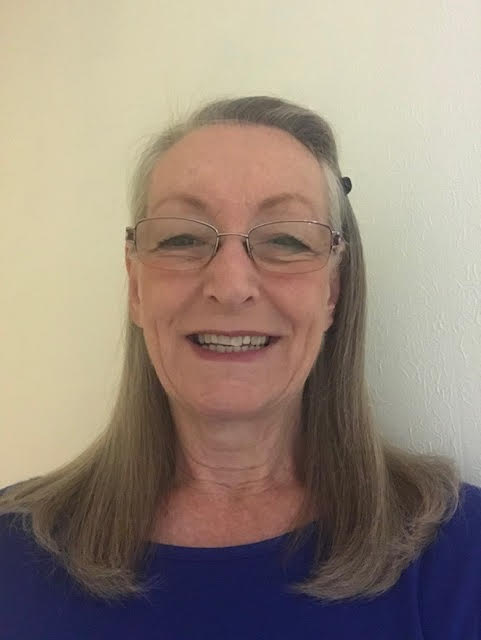
by Chögyam Trungpa Rinpoche, pages 115–116My hair is getting so long!
My hair brought to mind for John and me “Rapunzel,” the fairy tale by the Brothers Grimm. I had to look it up to remind myself of the details, so you might enjoy at least a refresher of the end.
For two years the poor blind prince wandered the world, looking for Rapunzel. From morning to night he called for her, but it was no use. At last, he reached a desert. One day, he heard a beautiful voice singing. “Oh!” he thought. “I know that voice!” It was his dear Rapunzel! He went closer and closer to the voice he knew so well.
“My prince!” called Rapunzel when she saw him. The two of them hugged tight. Two tears of joy fell into the eyes of the prince. All at once, he could see again!
The opening quotation from Milarepa sits at a very hollow home in my heart, especially the phrase: “Don’t try to push your ideas, don’t dictate…”
And that last line: “Dharma has no conflict.”
I feel the subtle grasping to have our country and my world be free of conflict.
That longing for freedom from conflict is amplified as we winter here in Florida where political signs continue to swing in the tropical breezes and the doors to restaurants and bars are wide open even as Covid cases continue to rise.
Of course, these conditions are impermanent.
This, too, shall pass.
For those who are not inclined to click on the link to read the entire story of Rapunzel’s long hair, here is the end:
And what happened next, well, I’m sure you can guess! The prince and Rapunzel went back to the kingdom where the prince lived. They were married as soon as they could. The prince became king of the land and Rapunzel became queen. The two of them lived happily ever after.
Today, I will let the dharma come to me.
Hair grows.
-
It’s Perfect!
It is only with the heart that one can see rightly;
what is essential is invisible to the eye.~Antoine de St. Exupéry
Yesterday afternoon I attended Remembering Wholeness with The Mother, a divine feminine being channeled by Barbara Brodsky. The opening comments tied right in with a previous evening’s conversation about some ongoing pain. I had asked my friend to identify any way she has not befriended her body. She spoke right away: pushing her body when it was trying to get her to stop.
Interestingly, the message I received from The Mother addressed the same dynamic for me on the emotional level.
-
What is there in your heart that you have pushed aside feeling it may prevent you from coping; feeling it may diminish your strength if you hear this or that?
The evening my dad died I went to my client’s home and did an art show.
The afternoon my mom died I went back to Holistic Alliance and saw clients.
The Mother closed her words to me with this phrase: It’s perfect. Perhaps not always pleasant, but perfect.
She reminded me that nothing the heart speaks is good or bad. It is all simply movements of the heart — some more grounded in fear, some more grounded in love. “Unless you hear it all, there is not wholeness.”
She offered encouragement: There is still some confusion that’s coming out of not deeply listening to and trusting your heart — your heart’s love, your heart’s wisdom.
Even quoting lyrics from a Walt Whitman poem, “I Celebrate Myself, and Sing Myself,” over and over, person after person, the theme of the day was the importance of learning to cherish yourself, hear yourself, love yourself.
As I walked alone in the dark last evening, I allowed tears to flow, saying to my heart over and over, “It’s perfect. Perhaps not always pleasant, but perfect.”
Today, it is great-grandson, Jackson, who has my heart singing Karen Drucker’s “Gentle With Myself.”

-
I will be gentle with myself
I will be gentle with myself
And I will hold myself like a newborn baby child
I will be tender with my heart
I will be tender with my heart
And I will hold my heart like a newborn baby child
And I will only go as fast
As the slowest part of me feels safe to go
I will be easy on myself
I will be easy on myself
And I love myself like a new born baby child
And I will only go as fast
As the slowest part of me feels safe to go
I am gentle with myself
I am gentle with myself
And I hold myself like a new born baby child
And I rock myself like a newborn baby child
And I hold myself like a newborn baby child
And I love myself like a newborn baby child -
Repercussions and Moral Awareness
We are all volunteers, come to awaken ourselves and all human beings. ~ Aaron A pithy line from the story of Joseph and his coat of many colors in the Hebrew Old Testament has been working on my heart. The story is familiar to many: Joseph, the youngest son and his father’s favorite, was given the special coat that had been (according to patriarchal tradition) owed to the eldest son. Joseph’s brothers were insulted, enraged, and vengeful. They sold Joseph into slavery and told their father Joseph had been killed.
The karmic wheel is always turning.
Joseph won favor with the Egyptian Pharaoh, and was put in charge of all of the stores of food. Years later, Joseph’s brothers came to Egypt desiring to buy food because of the famine. Imagine their shock to see the brother they had abused be the one in charge!
Joseph could have justifiably responded in myriad ways, but Joseph responded from AWARENESS: As for you, you meant evil against me, but God meant it for good, to bring it about that many people should be kept alive, as they are today. ~ Genesis 50:20
In my awareness, Joseph’s story was related to yet another covid death. Two days after our granddaughter, Courtney Ross, gave birth to our great-grandson, Jackson, her other great-grandfather died from covid-related pneumonia. RIP: George Ross.
The mask and safe-distancing polarization…. Knowing many in that family continue to gather without precautions. I saw those as the “You meant evil.” I could also see the perfection of the timing – just a couple of days after Jackson’s birth. Many ancient cultures recognize the perfection of the coming in and passing on which happens in families.
I could also see a gift that—being so soon after Jackson’s birth—his mom would not go to be with the extended family and take him, possibly exposing herself or him to the virus. I have been easy to tears about everything.
Joy without sorrow would be hollow: having without losing. ~ Aaron My friend, Patty, recently lost her mother to covid-related heart failure. Her brother (an anti-masker) exposed Alma. Yes, she was 97, and Courtney’s grandfather was 90 — but both were fully engaged in life, both vital at those ages. Patty’s pain continued as her family was split in how to celebrate their mother’s life. Patty and some of her siblings not seeing it as responsible, made the difficult choice not to attend a large public gathering insisted on by other siblings.
The karmic wheel of action was different for each.
“And we know that all things work together for good to them that love God, to them who are the called according to his purpose.” ~ Romans 8:28 It is possible to see the good/gift/perfection without denying the responsibility of an unwholesome action, as spoken recently in the dharma teachings: That was the first time I recognized my choices had repercussions in the world: I had the power to do good or to do harm.
A Buddhist articulation of life describes Sila, or moral awareness, as “right view” (Eight-Fold Path): the seeing of things just as they are.
It is said that in Hindi India the idea, “Oh, the gods willed it,” holds a lot of devotion, but not much responsibility. Regardless of what else is there, you are responsible for your choices as each choice has repercussions….
My choice is to not give or get the coronavirus, if I can help it. Their are repercussions to every choice, such as my friend missing her mom’s funeral.
The shadow is no less an aspect of the divine than the light. 
-
2021 – A True Spiritual Path
Deep Spring Center
Thought for Today
December 31, 2020So often beings have a
limited view of spiritual life
that creates a duality in themselves,
so that they only see themselves
as ‘being spiritual’
when they’re being kind and loving.When painful emotions arise,
then they think,
‘I am no longer being spiritual.
I should fix or get rid of these emotions
and come back to kindness and
then I will be spiritual.’But this dualistic thinking only
enhances the fragmentation of the self and
enhances negativity and suffering.To open the heart to the self,
just as it is in this moment,
is the true spiritual path.~ Aaron
As we turn the page on our calendar to 2021 at midnight tonight where ever you are, hindsight will be 2020. New Years has held a nostalgic space in my heart and mind for as long as I can remember, but just as 2021 offers unlimited possibilities, tomorrow is also just another day.
What will you remember most from the past year? High on my list is the consistent kindness and generosity of our friends, Linda and Larry, consistently doing our grocery shopping for us. First, using InstaCart, and then going to the grocery store, just so we could limit our exposure to the coronavirus.
I will remember the blessing of Zoom bringing the meditation hall into my home.
I will also feel the sting of not going to Tennessee to visit Stacey’s family on our way home in April. Or having to tell Melody I could not do an in-person ceremony for her mom, my friend and colleague, who contracted COVID-19 while in the hospital with acute pancreatitis. Bonnie passed without Melody or Dan, Bonnie’s husband, having opportunity to be with her.
No service of celebration of life for Fred Gibby yet either. They say it will be an ultimate hug-fest when the time is right. and Fred loves that idea!
It is otherworldly to not have gotten to Kalamazoo to see Joel and the kitties; and very hollow that I did not unpack the office when contents were moved to the beautiful new space at Lakeshore Acupuncture.
Immense gratitude for Barbara Brodsky and John Orr and Aaron and Jeshua (and all who help me remember who I really am) seeps deeply into every day.
The take-out dinners and dominoes by Zoom.
And now, Jackson Taylor Yarber, born December 28, 2020, has joined our family, and I am loving my first great-grandchild fully from Southwest Florida as he is in Tennessee. Fingers crossed it will be safe to hold him and smell him on our way back home in the spring.

In the spring — the spring of 2021!
It feels otherworldly to say that…
2020 is ending.
2021 is beginning.
Suddenly, I am hearing a song from the musical Godspell in my head: Where are you going? Where are you going? Can you take me with you?
Last December I was fixated on accessing a Magic Eye Wall Calendar! When I found one, I decided to gift a bunch of folks! Janis and I have ritualized the turning of the page on the first day of each month, letting the image come into view, noticing how some are very easy and others quite challenging.
Interestingly, there will not be a Magic Eye Wall Calendar for 2021, as announced on the website: Our calendar publisher has asked us to wait until next year to publish a Magic Eye 2022 wall calendar, as printing, shipping and distribution channels have all been disrupted by Covid-19. We will not be releasing a Magic Eye 2021 wall calendar. Wishing everyone a happy & safe year!
Janis and I have agreed to go back through each month of the 2020 Magic Eye Wall Calendar, enjoying again in 2021 what we learned in 2020.
The missing and longing, and seeing and being. It has all been here all along.
Here’s to 2021, a true spiritual path. It, too, has been there all along….
“If you can see your path laid out in front of you step by step, you know it’s not your path. Your own path you make with every step you take. That’s why it’s your path.” ~ Joseph Campbell