Tag: Rupert Spira

  • The Substance of All Things

    Art is remembrance.
    It is love.
    It is like a sword
    that distinguishes
    between appearance and reality.
    ~ Rupert Spira

    I have been wondering just what it is that allows some people to find joy or see beauty or create art where it might have been missed by another.

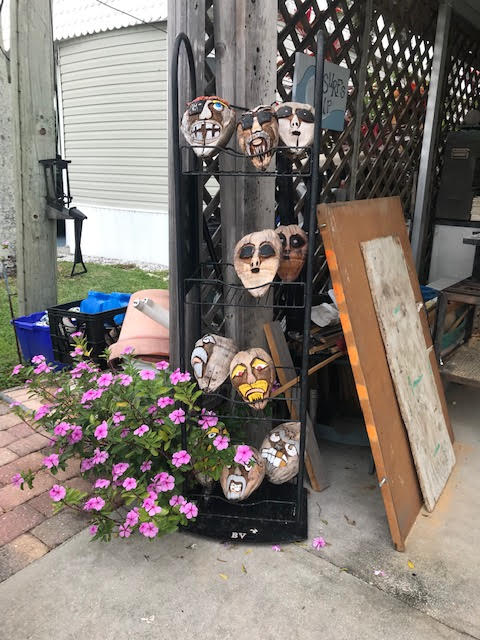
    Musing is jogged by such mundane objects as coconuts and trees and chickens! My sweet friend, Carol L. Myers, with her recent display:

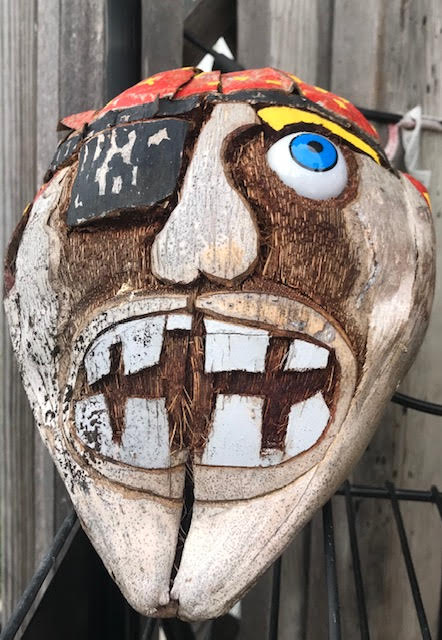
    Not only did someone take time to create these coconut faces (below), someone also displayed them where others could share in the joy.

    And someone paid great attention to detail.

    Artists are like that. Artists pay attention. An artist can see something that has been there all along, but not noticed, and an artist shares what is there with the world.

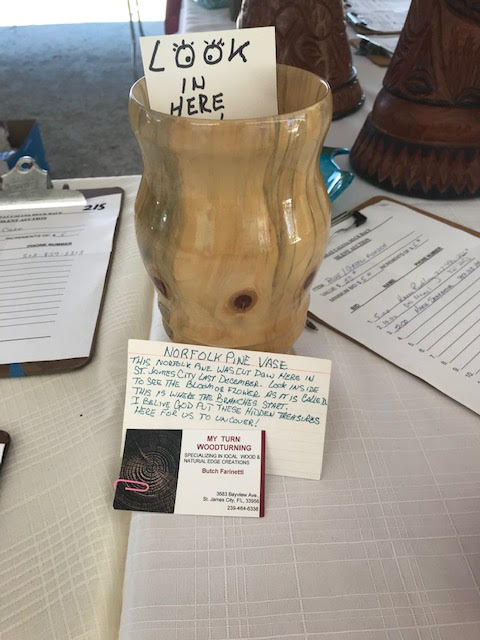
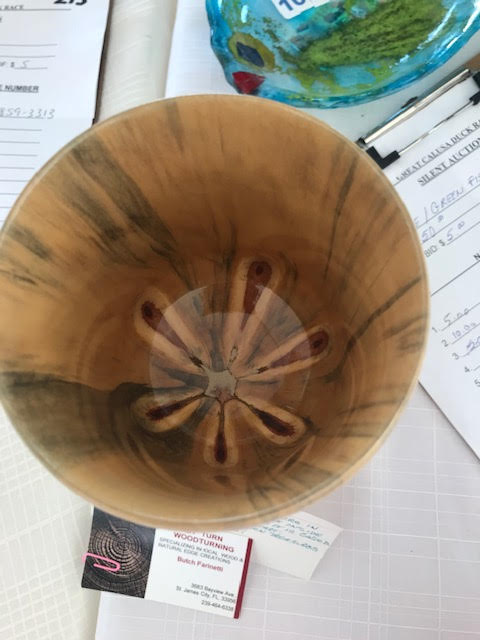
    Butch Farubetti looked at a Norfolk Pine that had been cut down and saw a ‘hidden treasure’ inside.

    In The Art of Peace and Happiness (Presence, Volume 1), Rupert Spira says this about art:

    An apparent object is never itself beautiful. True art is neither representation nor abstraction. It is revelation—the revelation that love, rather than inert matter, is the substance of all things.

  • It is Never About the Hat

    I am so blessed to have beautiful, soulful, women friends. I had lunch with one, Jane Foster, on Friday. Especially after all these years, hearing Jane share her story still touches me. (See Jane Foster’s Story)

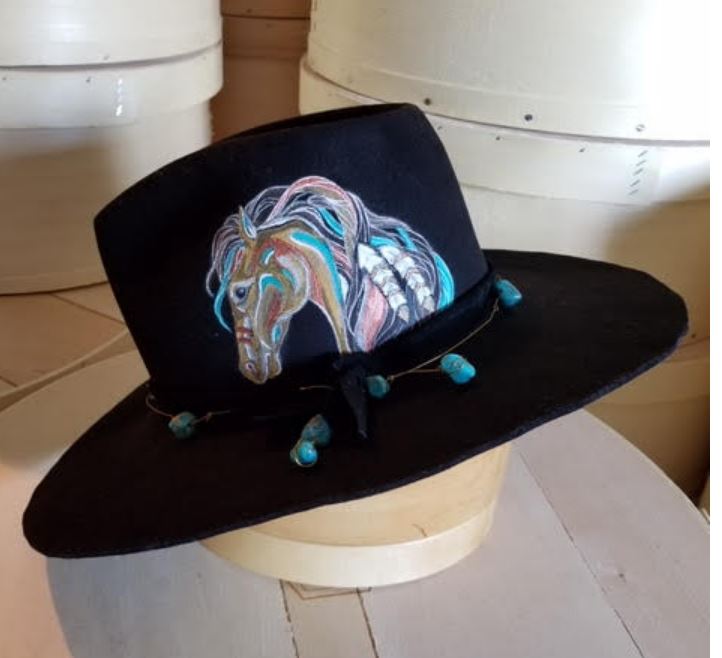
    Jane was telling me about a custom hat she is having made by a woman out west. The woman’s husband has been very ill, so she is homeschooling their children, caring for her husband, and the custom hat business helps them make ends meet.

    “Look at me. I am 72, and I am still here, and here you are making me a hat!” Jane told the hat-maker, who thanked Jane for restoring hope.

    It is never about the hat.
    This week, I finally got over to Kalamazoo and Joel and I watched the finale of Dancing with the Stars. The results were shocking, but the dancing and the special music, was, well—very special! I loved Lauren Daigle’s singing “You Say”. Here are some comments about the story behind her writing that song:

    It was the day after my very first Dove awards, and I remember being completely overwhelmed. I walked into the studio, and Paul and Jason, my producers, were in there and they’re like “All right what’s going on in your world, how’s it been?”

    It was the first time we had written since How Can It Be…I just remember feeling like so much had happened the night before, wondering How do I come back down to normal, how do I come back down to reality? And I started realizing these patterns of really high highs and then, okay now there’s a low. Really high high, now there’s a low…And Involving expectation in that space can just leave you kind of questioning your identity- Where do I fit in, where is my security, where is my footing?

    So when writing “You Say,” I just remember feeling for the first time pretty conflicted. It was definitely the first moment in just being an artist that I was like Okay, where is all this going excactly? And I know that we’ve all faced moments in life where we can feel a crossroads happen— where we can see the past and also see the future, and realize how we are supposed to exist in the present. And it was one of those moments where I could see where things were going and I knew exactly where I came from, and I needed those worlds to still be married. (CCM Magazine)

    Here is the first stanza of Daigle’s “You Say” lyrics:

    I keep fighting voices in my mind that say I’m not enough
    Every single lie that tells me I will never measure up
    Am I more than just the sum of every high and every low?
    Remind me once again just who I am, because I need to know (ooh oh)
    You say I am loved when I can’t feel a thing
    You say I am strong when I think I am weak
    You say I am held when I am falling short
    When I don’t belong, oh You say that I am Yours
    And I believe (I), oh I believe (I)
    What You say of me (I)
    I believe

    Songwriters: Paul Mabury / Lauren Ashley Daigle / Jason Ingram
    You Say lyrics © Sony/ATV Music Publishing LLC

    When she was 15 years old, Daigle had an autoimmune illness that kept her down for about two years. She says that is when God taught her about her character.

    Today I had Christmas Tea with another precious friend, Kathy Zerler. As we sipped on tea made from the peppermint Kathy grew in her garden, dried in her basement, and blessed by her meditative working of the mint with her hands, we treated ourselves to a few “cards.”
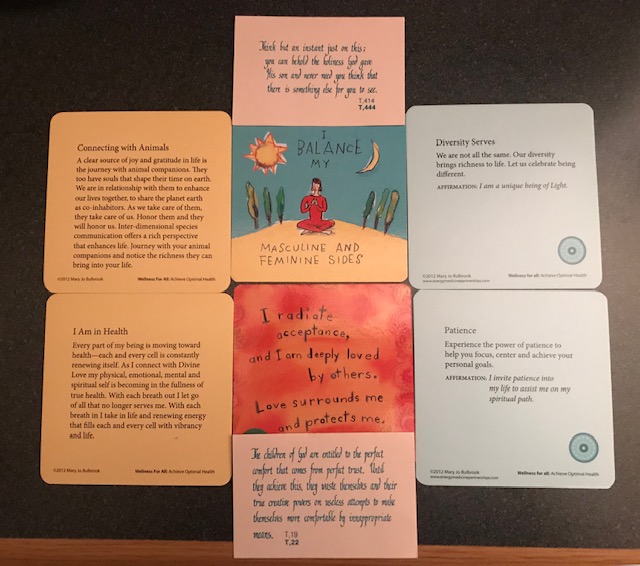
    We exchanged gifts. I gave her a hand-crocheted kitchen scrubby, home-made jalapeno jelly, and yummy socks. She gave me fabulous glass containers to hold crackers and nuts on my kitchen counter, more peppermint, and an eye pillow and soap made from lavender she grew.

    We shared how each of our spiritual lives are deepening—my two year commitment to the Dharma Path, and Kathy’s renewed commitment to bible study and contemplation. I read to her from Rupert Spira’s The Transparency of Things: “Non-Duality is not an immunisation against feeling. In fact, it is the opposite. It is complete openness, sensitivity, vulnerability and availability. Actually, suffering is our resistance to feeling, rather than a feeling itself.”

    I confessed to feeling like our lives are being pulled away from one another, and read a bit more from Spira: “Consciousness is absolute Freedom. We allow this Freedom to express itself as it will, how it will, where it will and when it will. In one body/mind this might take the shape of a character that is quiet and sensitive, whilst in another it may express itself in a wild and exuberant way. We should not be misled by appearances.”

    It is never about the hat or the tea.

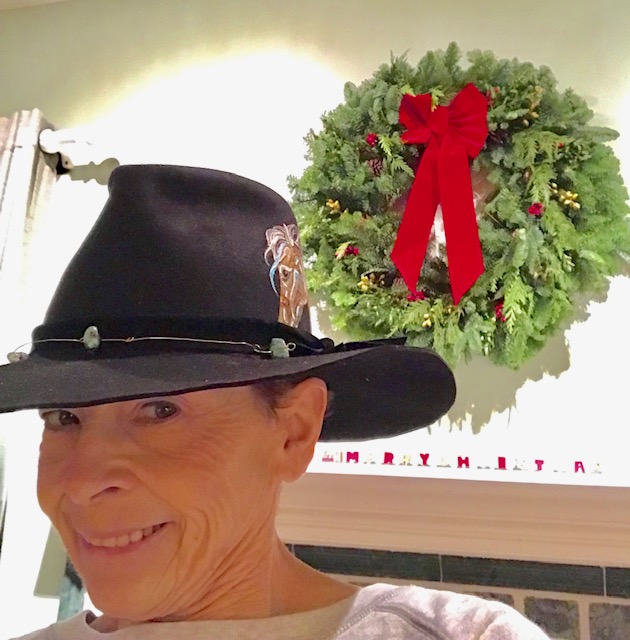
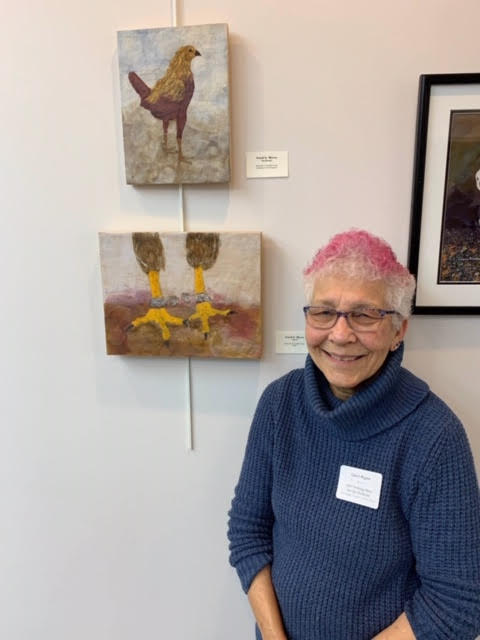
    P.S. When Jane received the hat, she sent this photo, and a message saying she thought the hat needed to be named. She decided to name it the “Giving Hat” because her husband gifted her the hat, it is giving her so much pleasure, and the proceeds that will go to cancer research is giving others a chance at a longer and better quality of life. Here she is in the “Giving Hat.”
  • It Is Only Mud!

    I was going to stop at a nearby apple stand on the way to my doctor’s appointment, but was a wee bit tight on time. Thanksgiving would be missing something without my mom’s Dutch apple pie. It is my contribution to bring Michigan apples to Tennessee for the pies.

    I had just loaded my precious apples into the front seat of my van when another customer arrived. The man had a couple of questions about the varieties and prices, and since he assumed I am a person who knows something, I helped him make his selection.

    As I came back around my van to get into the driver’s seat, I noticed another vehicle in the circle drive way across the lawn. A woman was standing in front of it, looking stressed.

    I called over to her, “Do you need some help?”

    Nodding her head, she called back, “Yes, we are stuck.”

    Thinking I was just doing some quick in-and-out-of-the-car errands, I had no hat or gloves. The wind was brisk as I walked across the lot.

    A younger man, perhaps a son, was on his hands and knees, digging behind the back tire with a small stick. Dressed only in athletic shorts and a light jacket, he was down on the cold, damp ground.

    “We could use some cardboard,” the woman said.

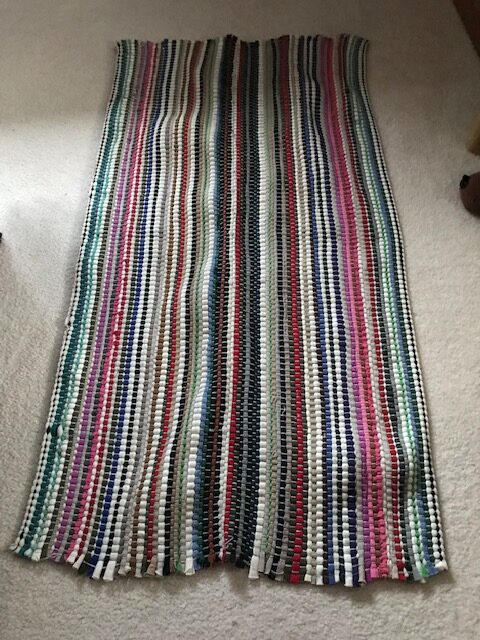
    I hiked back across the lawn, and opened the back of my van. I knew I had unloaded some cardboard boxes earlier, sending them to recycling. I grabbed the only thing in there—a white rag rug. By standing on tip-toe, and leaning over the counter into the apple stand, I was able to reach a small board that had “PEACHES” painted on one side.

    I hiked back across the lawn, clutching the rug in one hand and the board in the other.

    The woman looked at the rug and shook her head, “I don’t want to get your rug muddy….”

    “It is only mud,” I pointed out.

    I was finally able to convince them we could use the rug under one tire and the board under the other for traction. Cautioning the woman to step on the gas very slowly, I went to the front of her vehicle to push. She got in, put the vehicle in reverse, and I pushed.

    Success!

    It is our experience that if we feel hateful, we act hatefully. If we feel loving, we act lovingly. Likewise, if we truly feel that everything and every one is an expression of the same one Reality that we ourselves are, we will act accordingly and will quite literally behave towards others as we would behave towards ourselves.

    (The Transparency of Things, by Rupert Spira)

    Today is only November 19, but the season of kindness has already arrived.

    This year, let’s see if we can all remember it is only a rug, and it is only mud, whatever it is. Let’s be intentional to have kindness last until this time next year, and then let’s start the season of kindness all over again.

    Here is the freshly washed rug, no worse for the wear.
  • Upekka

    You have heard it said to be careful what you pray for. This past Tuesday evening, as our Dharma “Path of Clear Light” class was coming to an end, I asked for specific instructions around the practice of Upekka. Upekka is the Buddhist practice of equanimity.

    John Orr’s clarification of the Upekka practice, “All beings are heirs to their own karma. A person’s happiness or unhappiness is not dependent upon me but on their own actions and choices,” resulted in Barbara Brodsky’s offering thanks for him reminding her to keep that in mind related to her husband, Hal.

    Nothing in the teachings John shared, or Barbara’s comments, totally prepared me for the next few days of interactions with friends and clients.

    People are navigating every one of the eight worldly conditions: loss and gain, good-repute and ill-repute, praise and censure, sorrow and happiness.

    To practice Upekka is to be unwavering or to stay neutral in the face of each of these.

    The “far enemy” of Upekka is greed and resentment, mind-states in obvious opposition. The “near enemy” (the quality which superficially resembles upekka but which subtly opposes it), is indifference or apathy.

    “Do you want me to just be present with you or would it be helpful for me to offer some sort of process?” breath barely audible on either end of the phone.

    Skating on thin ice.

    Having been reading Rupert Spira’s work on nondual awareness, I pretty quickly notice the subtle grasping, the habit energy of not wanting those I care about to suffer.

    “Many of our ideas and beliefs about ourselves and the world are so deeply ingrained that we are unaware that they are beliefs and take them, without question, for the absolute truth.” ~ Rupert Spira

    The ground beneath my feet is shifting.

    “The discovery that peace, happiness and love are ever-present within our own Being, and completely available at every moment of experience, under all conditions, is the most important discovery that anyone can make.” ~ Rupert Spira

    Timing is everything.

    Richard Bandler says the best way to help a poor person is to not be poor.

    I grab the Daily Recollection and finger my mala while reading the 53rd through the 55th beads:

    I remember the practice of sati (presence):
    To be present with the breath.
    To be present with the proper object as it presents itself.
    To be present with the proper attitude: Whatever arises, I will not fixate on it. I will let my mind be free and spacious, resting in pure awareness.

    “The greatest discovery in life is to discover that our essential nature does not share the limits nor the destiny of the body and mind.” ~ Rupert Spira

    I add to Upekka the practice of Metta (lovingkindness), Karuna (compassion), and Mudita (sympathetic joy).

    I remember the great prayer: May all beings be free from suffering. May all beings feel joy. May all beings realize their intrinsic perfection and find perfect peace.

  • If and When

    “Happiness can be found,
    even in the darkest of times,
    if
    one only remembers to turn on the light.”
    ~ Harry Potter and the Prisoner of Azkaban

    and

    “When
    we have accessed the peace that is ever present in our self under all circumstances,
    the body, mind, and world are profoundly affected,
    and, in time, become increasingly permeated by it.
    They begin to shine with the peace of our true nature.”
    ~ Rupert Spira, The Art of Peace and Happiness
    (Presence, Volume I)
    (Our True Nature; The Nature of Peace, Happiness and Love;
    The Origin of the Separate Self; The Body; The World; Experience)

    The afternoon did not unfold the way I had expected. I had been invited by a friend to attend a “Reader’s Theater” about 30 minutes away. I invited two mutual friends to join us. It was a lovely drive. Autumn colors dotted the woods on either side of the two-lane road, and we listened to the recording of a sermon given earlier that morning.

    One car sat forlornly in the parking lot when we arrived a mere 15 minutes before showtime. A phone call solved the mystery: the event we had come to attend had taken place the prior week!

    As so many people suffer profoundly, we find ourselves searching for the most appropriate way to be all that is happening in our political culture. For my part, I am reading Rupert Spira’s writings about nondual awareness. In an almost wordless way, it is clear our awareness is key.

    Although Spira does not use the phrase, “If and when,” that seems an appropriate title for this post. It is a phrase used to say something about an event that may or may not happen.

    Here are two books on nondual awareness by Rupert Spira:

    1. The Art of Peace and Happiness (Presence, Volume I)
    (Our True Nature; The Nature of Peace, Happiness and Love; The Origin of the Separate Self; The Body; The World; Experience}

    2. The Transparency of Things: Contemplating the Nature of Experience

    My friend recommended Spira to everyone who desires to experience liberation. She said to read the books in that order. Although they are both dated 2016, she thinks they may be reprinted from earlier material.

    Our thoughts go out to people who are feeling so very afraid. Fears loom around loss of freedom, the environment, racism, sexism. There is no denying the fear. Fear haunts our thoughts. Fear is felt in our bodies. Fear makes us experience the world as a web of hatred and dissonance humanity is caught in.

    But Spira makes a good point that our true self is not our thoughts, feelings, sensations, or perceptions. Rather, our true self is aware Presence. “Like someone whose fists have been clenched in defence for so long that they are no longer aware of it and thus feel perfectly relaxed, so our body and mind have been permeated by the tensions that are generated by the idea of a separate self.” (The Art of Peace and Happiness)

    How interesting that what we thought we were going to enjoy had already been enjoyed.

    If and when you read Spira, you will realize there is no separate self. Our “aware Presence” is inherently peaceful and, thankfully, this peace does not depend upon what may or may not happen.

    We are peace itself.