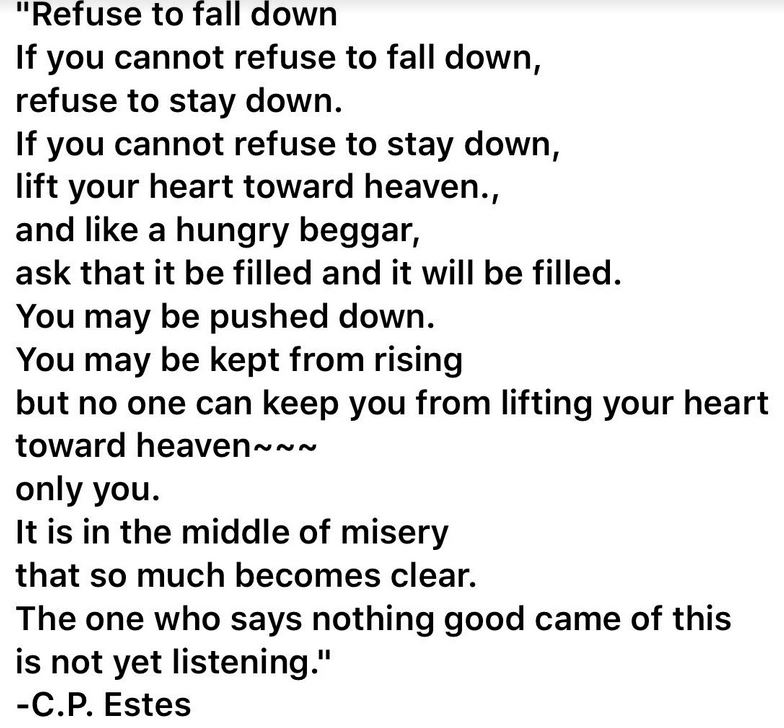
What do you see? When you look at the world, what do you see? This is not a frivolous question, and it may be one of the most vital choices you make for yourself and our world.
This morning the Buddhist group that gathered for meditation via ZOOM spoke of the violence that had erupted in Minnesota, and spread from there. One couple shared information indicating the violence likely was done by an international trouble-making group that uses social media to organize. Most (maybe all) of those protesting were genuinely peaceful.
We, of a certain age, remember all too well the racial tensions from fifty years ago, and many were involved in working toward justice and harmony. What I found almost as disturbing as the news of the violence and destruction was the expressed emotions of helplessness and discouragement and sadness generated by watching the new reporting. If my Dharma brothers and sisters who are committed to lovingkindness and equanimity can lose touch with their light within, what about those who have not practiced access to a balanced world view?
Last evening, while some were watching the distressing news, John and I were watching the season premier of America’s Got Talent. AGT is not a show I normally watch, but, a friend had been persistent in encouraging me to watch it. I had actually turned it on the night before when I crawled into bed, and I watched a couple who train pigs to do acts like you normally see dogs do in the circus. I fell asleep. I told Linda, but Linda is a friend who knows me well. She simply said again, “It was one of the best we have seen, and I think you will be glad you saw it.”
Two of the acts I watched show an amazing world view. The first was Archie Williams—a man who was wrongfully convicted of rape. Archie was arrested in 1982, and imprisoned in a Louisiana prison the following year. Archie spent 37 years in prison for a crime he knew he did not commit. Finally, forensic evidence proved he was innocent, and he was released in 2019. You owe it to yourself to search for and watch the entire nine-minute version of Archie’s singing “Don’t Let The Sun Go Down On Me.” Archie told AGT, “My body was in prison, but my mind was not…. Prayer and singing got me through.”
A person can sometimes let a mind be in prison even though a body is not.
The final America’s Got Talent act was “Voices of Our City Choir” which was founded in 2016 by San Diego resident. While living downtown San Diego, Steph Johnson, a jazz singer-guitarist, met a lot of talented musicians—people living in shelters and on the street. Today her nonprofit operates several music and advocacy programs, has a choir of over 225 people, and distributes approximately 7,000 pounds of food per week! The group wrote the number it performed on AGT: “Sounds of the Sidewalk.” Another nine-minute video, as my friend said, that is definitely worth watching….
Tomorrow is the first day of June. I am excited to look at the Magic Eye calendar image for the new month. (See Our True Nature.) My sister, Janis, and I are both excited. Regardless of the news, we get to turn over a new page. We will meet over some device and we will together see what beauty is hidden in plain sight, depending (of course) on your world view….