Tag: Jerry Ashmore

  • Holy Holons

    On Friday I could feel that my blood pressure was high. I began to affirm: I choose to release this pattern within me that has contributed to this situation.

    Boom!

    I am 12 years old again — August 1962 — in the auto accident with my dad. I am reliving all the terror at the scene. I allow myself to feel the feelings. I begin to cry out, “Daddy, are you OK?” and to no one in particular, “Make them stop!” asking them to make the sirens stop.

    Listening to an interview with Iyanla Vanzant on Emotional Freedom Technique (EFT/tapping), I put the blood pressure cuff on my arm and took my blood pressure.

    I did that over and over as I invited release of this life-time pattern of fear.

    My dad’s feet were in the floorboard on the driver’s side of the car, but shattered flesh from my forehead prevented my being able to see them. To the best of my memory, I did not see my dad until a day or so later when he came to the hospital to see me.

    I allowed myself emotional space to cry out as I tapped.

    Ilyana says one must expand and increase our emotional library. Jessica Ortner (The Tapping Solution) said it is about developing a vocabulary so we can speak out. “This is the feeling I’m having right now. I’ll get through this but right now this is what I am feeling.”

    I wrote in my journal: “I am mourning. I’m feeling something from when I was five years old.”

    And, “I forgive myself for believing that ______ still has power over my life.”

    I took 1/2 of one of the anxiety pills my doctor prescribed.

    I tapped a lot.

    I cried some.

    On Saturday, John had an off day and that intersected with my heightened state. We were neither truly skillful, but this morning we were both able to speak compassionately and affirm our loving connection.

    Jerry Ashmore’s dharma talk was about how the Heart Sutra is a conceptual torpedo in that it demolishes dualism. Jerry said, “Every time you think you are isolated, you are delusional.”

    “Form is emptiness (śūnyatā), emptiness is form.” (from the English Heart Sutra)

    Nothing lasts forever. We know that. But…. as Ilanya describes it, every time we revisit the story we punish ourselves.

    During the sharing after the meditation and the dharma talk one woman was saying how she was having difficulty getting free of rumination and depression. Jerry said, “The witness is free. No anxiety, no fear, no hatred.”

    Totally free.

    Jerry spoke about a holon. A holon is something that is simultaneously a whole in and of itself, as well as a part of a larger whole. He said each of us is a holon, simultaneously a whole as well as a part of a larger whole.

    I passed along Thich Nhat Hanh’s MANTRA FOR DEALING WITH STRONG EMOTIONS:

    Make sure you remember to physically “BREATHE IN” or “BREATHE OUT” at the appropriate place when reciting each line; as the actual breath in or out is part of activating the Energy.

    The “operative word” of the Mantra replaces the strong emotion being worked on, with its appropriate name: Fear, Anger, Anxiety, Impatience, Judgment of self or others, etc. The example uses the word Fear. Good to remember that sometimes anger is an unknown component of the fear a person may be holding, because they have not been able to control or Fix It.

      Breathing In, I am aware of the fear,

      Breathing Out, I smile to the fear (yes, these are the appropriate words);

      Breathing In, I recognize fear as Energy,

      Breathing Out, I express Gratitude for Energy;

      Breathing In, Energy and Fear are Power,

      Breathing Out, I can safely hold Power;

      Breathing In, Power supports Wholesome Change,

      Breathing Out, I Invite That, which is for The Highest Good!

    I am not sure we ever talked about it so I can only imagine my dad’s terror at the scene.

    My dad I I are simultaneously a whole as well as a part of a larger whole.

    Breathing Out, I Invite That, which is for The Highest Good!

    Holy holons!
  • Grief 2 Growth: Planted, Not Buried

    One must have chaos in oneself in order to give birth to a dancing star.
    ~ Friedrich Nietzsche

    Recently I had a very tender sharing with a dear friend. It was tender because each of us is doing the best we can to love one another and that process isn’t always neat and tidy.

    Let the record show, the person I was sharing with would be considered one of the highest conscious beings you could meet. I hold that view of this friend as well.

    I also see places where I project onto her. In fact, I even said that to her: “I miss having opportunity to project onto you because I know when I do that I am afforded the honor of seeing my own self.”

    What we see is not a PERSONAL self.

    What we see is the universal SELF.

    Jerry Ashmore, dharma teacher at Empty Circle Zen Group in Hobart, Indiana, said, “Even before we practice it, enlightenment is there.”

    Jung wrote, “To confront a person with his shadow is to show him his own light. Once one has experienced a few times what it is like to stand judgingly between the opposites, one begins to understand what is meant by the self. Anyone who perceives his shadow and his light simultaneously sees himself from two sides and thus gets in the middle” (Jung, 1959, p. 872).

    One website suggested a simple process for working with shadow.

    1. Make a list of 5 positive qualities that you see yourself as having (e.g., compassionate, generous, witty, etc.).

    2. Look at each positive quality that you wrote down – describe its opposite (e.g., unfeeling, stingy, dull, etc.).

    3. Picture a person who embodies these negative qualities vividly in your mind. Roughly, this is your shadow.

    Mooji (Jamacian spiritual teacher from the UK) says, “Our ego is a Siamese twin, and we cannot put it somewhere else. It is important to recognize you are not it… To stop being what you are not there is something you must understand. Whatever you can see or experience, you are not this. You cannot judge your real weight by carrying a donkey on your back. When you cannot bear your self anymore, you are a good candidate for freedom.”

    The Basham family continues to experience the ripple effect of loss.

    Wednesday, September 29, 2021, at the exact time family was graveside with John’s brother, Jerry, in Michigan, we received news that our former sister-in-law had just passed in Texas. Her passing was not a surprise, and was in many ways a relief to her son, Jeff.

    One week to the day, October 6, 2021, news that Jeff’s sister passed in her sleep was a surprise, and anything but a relief.

    As long as we can be made to believe that one thing is good and another evil, we shall remain outside the Garden of Eden, and one day have health and another day disease, experience youth and vitality one day and age and debility another day because those are the pairs of opposites and they follow one another in cycles. It is only when we do not desire wealth or harmony any more than lack or discord, but seek only that which was original and primary in the Garden of Eden, that we rise above these opposites into eternal life.

    Joel Goldsmith, The Thunder of Silence

    As these additional conditions weave themselves through our psyche like summer weaves its way into fall, I am led to an interview by Brian D. Smith (Grief 2 Growth). Brian is sharing have said to his wife that he had not had signs for the 5th anniversary of their daughter’s passing, his wife pointed excitedly at a sign on a vehicle by them: I AM RIGHT HERE!

    Brian share that with Becky (Rebecca Austill-Clausen) during an interview about her 3 Secrets to Communicating with Your Deceased Loved Ones, in which she makes these points:

      Believe that the afterlife is real.
      Trust in your inner self.
      Recognize that love surpasses all boundaries (even physical death).

    Perhaps it is merely shadow (ego beliefs) that can separate us from fluent awareness of loved ones who have passed….

  • The Path to Peace

    If it happens, it needs to occur.
    ~ Neale Donald Walsch

    Jerry Ashmore, senior dharma teacher at Empty Circle Zen center in Hobart, Indiana, said simply, “If we don’t clear our stuff how can we help others?”

    But how do we know what our stuff is? We can pay attention to the tendency we have to “perseverate” — meaning when we repeat or prolong an action, thought, or utterance after the stimulus that prompted it has ceased.

    We have an interaction that triggers something. Thoughts pop into mind over and over and over again. For example, guilt or resentment might arise because we are looking at past actions not recognizing the experience as a moment of unconsciousness. (We don’t need to personalize it.)

    Forgiveness is when we bring presence (consciousness) to the thought as it pops into our mind yet again. We can notice that something has not yet been undone.

    This is not a new idea. Epictetus, a Greek Philosopher who was born in 50 AD and died in 135 AD, said: “Don’t hope that events will turn out the way you want, welcome events whichever way they happen: This is the path to peace.”

    Suffering is simply arguing with the way things are. Sokukoji Buddhist Monastery broadcast a dharma talk with a very interesting phrase: Path of Zen starts at the mountain top and goes up.

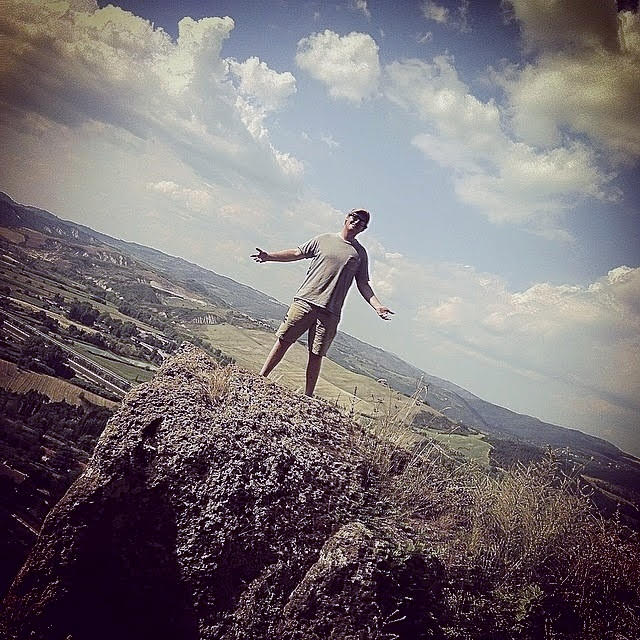
    Grandson, Adam, while he was in Europe.

    Jerry Ashmore went on to say that all practice starts by releasing tension in the body. He said, “We can be OK. Don’t discount OKness… the more you experience things as they are rather than how you want them to be, you are on your path.”

    Yesterday, The Mother (channeled by Barbara Brodsky) spoke this Darshan (blessing) to me:

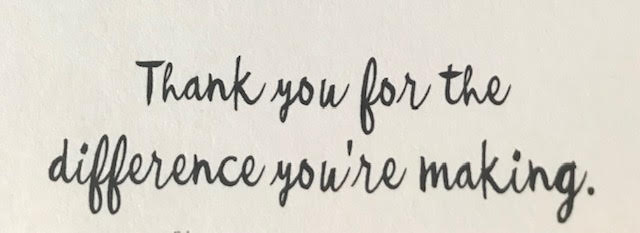
    Dear Friend, you are making a difference. Let go of the ten thousand (this is a reference to the person tossing stranded starfish back into the ocean) and stay focused on whatever is present in front of you and let your heart sing with joy for the difference you have been able to make in that presence.

    Will you try to do that? And if the mind goes to the ten thousand, just, “Shhhh…. Stop.”

    Contracting.

    Fear.

    Ahhh…

    Right there with fear is the heart of love. And the heart of love must be allowed to be free to continue making the difference.

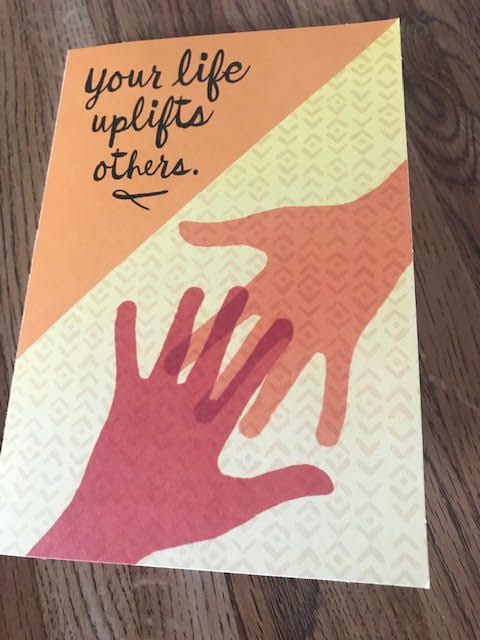
    Today, I took a friend for cataract surgery and received such a lovely confirmation in her thank you card:


    The opening quotation by Neale Donald Walsch concludes with this comment about path: “Whatever experiences the universe brings your feet are a part of your path, inviting you to consciously engage in a process of becoming the highest version of you.”

  • 3 Faces of Happiness

    “No matter how someone is acting,
    they want to be happy.”
    ~ Lion’s Roar

    Jerry Ashmore, senior teacher at Empty Circle Zen group shared this opening quote in his dharma talk this morning. As an aside, if you are looking for a wonderful Zen sitting with teachings, this group meets on Zoom twice per week: Tuesday evening and Saturday morning. I have really been grateful for this addition to my practice.

    Following Jerry’s talk, my search for “happiness quotes” showed 734,000,000 hits.

    This is a very important reminder. More meaningful in my personal experience this week that most.

    I sent a text message to my poetry writing group. “I am going to go for a bike ride instead of writing this morning. I need some grounding.” I shared some of the details (not pretty) about what was going on, and assured them I would log on in time for the update of an important project one of the women is currently working on. Her project is huge, and we all qualify as midwives….

    Lots of people find balance by exercising. Many find their center when they can get out in nature. For me, biking is a blessed bonus of both….

    Logging on after my ride, I was surprised to see one of the women in the group on line that had sent word earlier saying that she would not be there.

    “Deb, tell us how you are, and how things are with your _____ _____.” (She named the stressful situation. One of the other women in the group told me later that she had filled this woman in since she had not been expected to attend and, therefore, had not been included in my earlier text message.)

    As I began sharing, the woman who had asked me to share interrupted, “Deb, just the short version. We know you are grieving.”

    Now, admittedly, I have had some triggers with this group before.

    Whereever I go, there I am.


    “There is no short version,” I responded, and muted my mic.

    Humans can’t touch unconditional love sufficiently to extend it fully to all all of the time.

    Jerry said this morning, “That is where getting to non-hate is the wisdom practice.”

    I did more than get to non-hate. I have been so focused on something else that I offered a pretense to presence. As I forgave myself, I was able to not take her action as a personal attack.

    I was also able to do more than get to non-hate with the situation I had been challenged with for the past several weeks. The word that falls from my lips about the others involved most easily is: unskillful.

    Empathy does not show up for me in my top five in the Clifton Strengths Assessment. People who are really strong in empathy “feel what others are feeling as though their feelings are your own. Intuitively, you are able to see the world through the others’ eyes and share their perspectives.”

    I have come closer to a heart of compassion through decades of mindfulness (Vipassana) practice.

    To be mindful means to be aware. It’s the energy that knows what is happening in the present moment. Lifting our arms and knowing that we’re lifting our arms—that’s mindfulness, mindfulness of our action.

    When we breathe in and we know we’re breathing in, that’s mindfulness.

    When we make a step and we know that the steps are taking place, we are mindful of the steps. Mindfulness is always mindfulness of something.

    It’s the energy that helps us be aware of what is happening right now and right here—in our body, in our feelings, in our perceptions, and around us. ~ 5 Practices for Nurturing Happineess

    Her comment was unskillful, but my response was unskillful as well. The unskilled volley left us all raw. Hell, I was already raw. For all I know, so was she…

    That is the trick, isn’t it?

    Not even a person Clifton says is endowed with empathy truly sees the world through another person’s eyes. The stressful situation has been stressful precisely because we don’t see the situation the same way.

    Jerry asked us to ponder some questions about happiness:

    What is happiness? What does happiness mean for me? Is happiness just pleasure? Is it joy? Can I be happy without a sense of well-being? Is that possible? Can I be happy without a sense of purpose in life?

    We cannot truly speak about happiness in the Buddhist way without a nod to suffering.

      Being able to enjoy happiness doesn’t require that we have zero suffering. In fact, the art of happiness is also the art of suffering well. When we learn to acknowledge, embrace, and understand our suffering, we suffer much less. Not only that, but we’re also able to go further and transform our suffering into understanding, compassion, and joy for ourselves and for others.

      One of the most difficult things for us to accept is that there is no realm where there’s only happiness and there’s no suffering.

    I am not sure what the 3 faces of happiness are.

    Perhaps to forgive again, and again, and again….

  • Many Happy Returns

      “Whether we have happiness or not depends on the seeds in our consciousness. If our seeds of compassion, understanding, and love are strong, those qualities will be able to manifest in us. If the seeds of anger, hostility and sadness in us are strong, then we will experience much suffering. To understand someone, we have to be aware of the quality of the seeds in his consciousness. And we need to remember that his is not solely responsible for those seeds. His ancestors, parents, and society are co-responsible for the quality of the seeds in his consciousness. When we understand this, we are able to feel compassion for that person. With understanding and love, we will know how to water our own beautiful seeds and those of others, and we will recognize seeds of suffering and find ways to transform them.”

      ― Thích Nhất Hạnh, Your True Home: The Everyday Wisdom of Thich Nhat Hanh: 365 days of practical, powerful teachings from the beloved Zen teacher

    These words from Nhất Hạnh opened our practice this morning, January 30, 2021. What a powerful lesson to remember on the birthday of two people I love. One (a woman) is younger than I, and the other (a man) is slightly my elder. I cannot say for sure how I will be when I am his age, but I am old enough already to have compassion for the aging process.

    One of the members of Deep Spring Sangha lost his grandfather this week. One of the members of the Zen Empty Circle sangha lost his sister this week as well. Since the practice today was dedicated to her, Jerry Ashmore’s dharma talk began, “We don’t know for sure what happens after we die. At least I don’t. That’s absolutely the don’t know mind. The question I often ask myself is how can we make their death meaningful when a loved one passes?”

    Jerry continued with the following story:

    A student asks how to prepare for death.

    “When you die, and you are reborn, how can you be reborn in a good place, into a positive rebirth?” the Buddha asks the student.

    “Well,” the student replies, “I have to live a life of wisdom and compassion.”

    “Yes,” the Buddha agrees, “if you live a life of wisdom and compassion, you will have a favorable rebirth. Now, what if there is no rebirth, what will you do? What can you do to live a happy life?”

    “Well, I have to live a life of wisdom and compassion….”

    Jerry’s conclusion from this story is if we live a life of wisdom and compassion the afterlife will take care of itself.

    The sangha member who had just lost his sister wished she could have seen herself through the eyes of those who benefited from her life. She had been sober for 30 years. One person called to offer condolences saying because of his sister, she herself had been sober for 28 years!

    While we may have some moments of missed opportunities for living life with wisdom and compassion, our lives are filled with lasting moments of wisdom and compassion. Any missed opportunity is simply another invitation.


    Birthday Candles

    It’s a happy ritual
    meant to remind us that
    all we hope to have and be
    begins with a little
    wishing.

    ~ Meanings of Life – A Cardthartic Experience

    May all beings have a happy life, many happy birthdays, and many happy returns!

  • Filter Bubbles

    The one you seek, is the one who seeks.
    Therefore, It’s not “I” who reads spiritual books;
    it is not “I” who sits ZAZEN,
    paying attention to body, BREATH, and mind.
    IT is not “I” who let’s go of everything, but THIS, only THIS!
    ~ Jerry Ashmore, posted in Empty Circle Zen Group

    Most of us are aware of algorithmic editing at some level. All information we access is filtered according to a predetermined “sorting.” The news is full of Russia’s manipulation of social media (Facebook) and the hidden criteria of search engines (Google). Even if you are not new to the truth and implications, check out Eli Pariser’s TED talk about filter bubbles.

    Pariser says the key threat is this: “If I search for something, and you search for something, even right now at the very same time, we may get very different search results… And you know, the funny thing about this is that it’s hard to see. You can’t see how different your search results are from anyone else’s.”

    The biggest algorithmic editing risk might just be to our relationships. What if we have family and friend “filter bubbles” operating and we don’t even notice? Sky Nelson-Isaacs has looked at a model for synchronicity based on a process called “meaningful history selection.” His book, Living in Flow: The Science of Synchronicity and How Your Choices Shape Your World, is due out in the spring of 2019.

    This is so alive, so organic, so vital. Our brains operate just like these search engines: our thoughts and emotions are generated by our memories, and then our experiences are generated by our expectations. I don’t see you as you. I see you as my history of you. I don’t experience you as you, I experience you as I expect you. I am co-creating you in my image of you.

    Of course, as Jerry Ashmore wrote, “YOU” and “I” don’t exist on the ultimate level of reality. Even at the relative level we can see this is truth. We can look at our hand and see all of the fingers and we know the fingers are a part of the hand. We know the hand is also part of the body. Everything and everyone is part of everything and everyone.

    A precious friend has a life-long history of difficult interactions with a sister that has resulted now in a choice to “put her out of my life.” Conversations with my friend are around my hope/wish/insistence we can access genuine freedom inside buy changing how we look at things.

    Experience the bliss of Self-Respect and give respect to others at all times. When I am prejudiced against another, my narrow vision and small heart lower my self-dignity and self-worth.

    If you are insulted by another person, and you become angry in response, the sin is the anger which you create not the insult. You are asleep to the truth that you just hurt yourself, and that you are the creator of your anger not the other person. And now you have a recording in your consciousness that contains an image of the other surrounded by the energy of anger. You put it there, not them. Next time you see them, up comes the anger again, and in that moment you are at your least effective, paralyzed by self created anger, you are effectively out of the game until you cool down.

    “Thought for Today” ~ Brahma Kumaris