I visited with some deep friends (if not long friends) yesterday. I met them two years ago while biking in Port Charlotte and their sweetest little dog grabbed my heart and would not let it go. Of course, she was the magnet, but my friends are the glue.
The purpose for the visit was an article from the Wall Street Journal on March 15, 2025. Yes, they had a paper copy! Jason Zweig was writing about a person who had been near and dear to him: Daniel “Danny” Kahneman. Daniel chose to go to Switzerland and end his own life while 90 years of age but still near his prime. He sent news of his decision to some close to him, spent wonderful time in Europe with family and his partner, then went alone to Switzerland. Something about his story is riveting to me and, I would guess, repulsive to others. It is a hotly debated issue….
Two quotations in the article have made their way onto my journal page so I will share them. The first is by Annie Duke, a decision theorist and former professional poker player who wrote a book in 2022 titled, Quit: The Power of Knowing When to Walk Away.
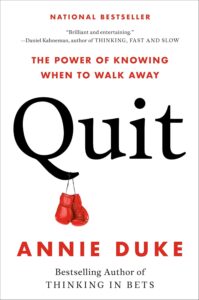
“Quitting on time will usually feel like quitting too early.” ~ Annie Duke
The second is by a psychologist at the University of Oregon, Paul Slovic:
They’re feelings.”
This morning’s aftersharing with the Still Mountain 6:30 am Tuesday meditation group was about what is often called “comfort care” – essentially the opposite of aggressive medical treatment to save or extend life. Several of those present had very strong desire for appropriate choice to avoid pain and/or anxiety. We spoke some about the nuances of palliative or hospice care, both of which often are referred to as comfort care. (Palliative care focuses on improving quality of life for individuals with serious illnesses by managing symptoms and providing emotional and spiritual support, while hospice care is a specialized type of palliative care focused on comfort and dignity for those with a life expectancy of six months or less who are no longer pursuing curative treatment. ~ Courtesy of AI)
The Four Immeasurables Prayer from Buddhism are profoundly meaningful to me: “May all beings have happiness and the cause of happiness. May all beings be free from suffering and the cause of suffering. May all beings never lose the happiness beyond all suffering. May all beings abide in equanimity, free from attachment and aversion.”
RIP Danny, RIP.