Tag: Guideposts

  • Gold Accent Wall

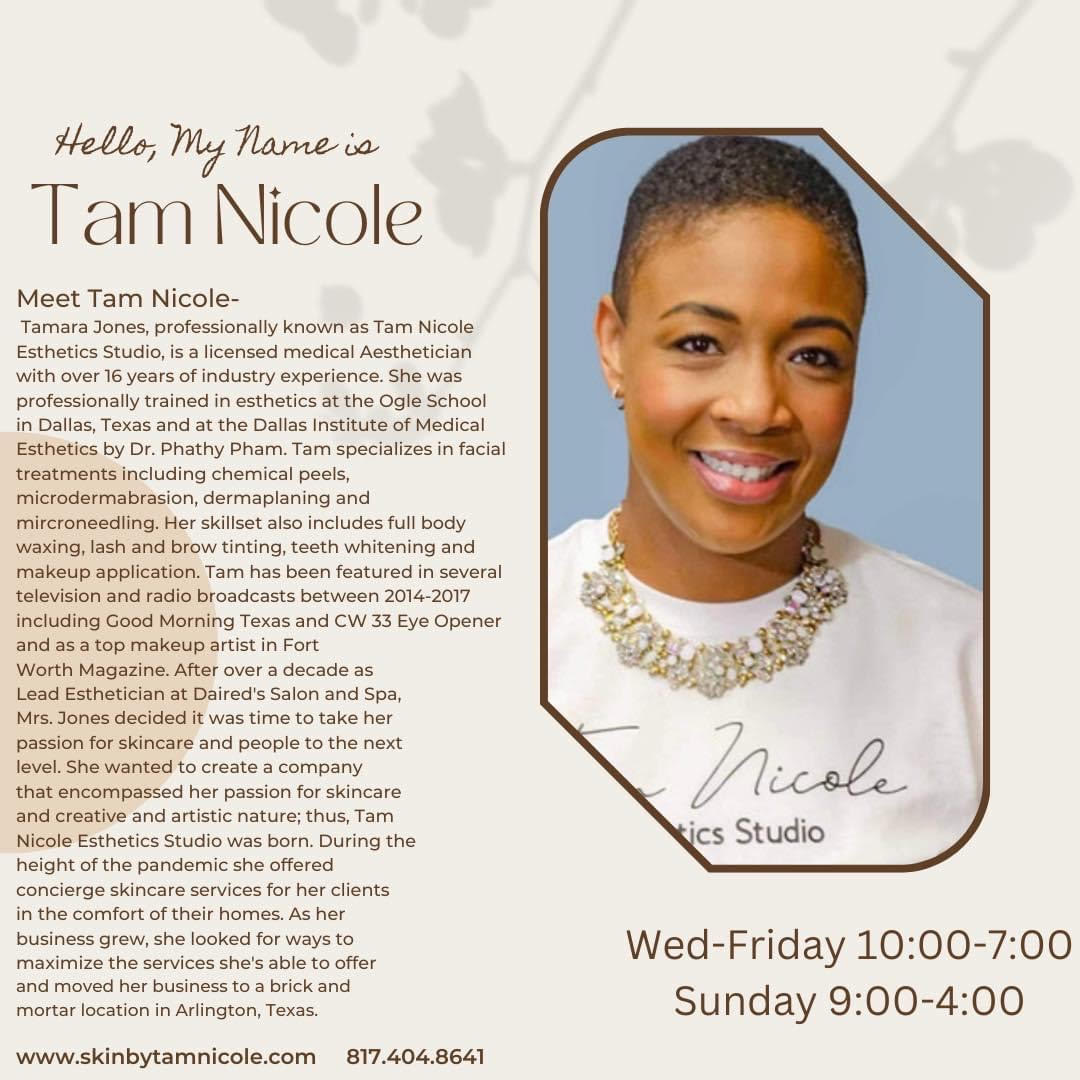
    It was traumatic having been let go from the prestigious salon she had worked at for 13 years. All because she asked to have two weeks before coming back after the shut-down due to Covid.

    She and her husband prayed for guidance. She began doing skin care in clients’ homes, but it was soon obvious she needed a place to open a small salon. She saw an available space conveniently located next to her daughter’s school, but it was only 300 square feet. Too small…. Nothing else was available in the building, but she left her name with the landlord.

    That night she dreamed of the perfect space, including vivid detail right down to the furnishings. The following morning she made a sketch. The accent color was gold, her favorite color.

    Two weeks later she received a call about a larger space which had opened up in that building. It was perfect. In fact, it looked just like her drawing with a nice waiting room and a service room. She knew this was the space for her spa.*

    The back wall was already painted an accent color: gold!

    *You can read “Blessings in Abundance, by Tam Jones” of Fort Worth, Texas, in Guideposts Aug/Sept 2023. Check out Tam’s website at www.SKINBYTAMNICOLE.com and like Tam Nicole Esthetics Studio on Facebook, follow tam_nicole_Esthetics_studio on Instagram, phone or text at (817) 404-8641.

  • Overcoming Addiction

    Start by doing what is necessary,
    then do what is possible,
    and suddenly, you are doing
    the impossible.
    ~Francis of Assisi

    “Addiction, it has been said, starts in pain and ends in pain.” This is the opening line in the Editor’s Note in the January, 2018, edition of GUIDEPOSTS. The title is ‘Overcoming Addiction.” The entire edition is dedicated to the hope of recovery that calls to every addict and the people who love them.

    I am no stranger to addiction. My dad was an active alcoholic throughout my childhood. I am so grateful for his sobriety that came after my marriage and remained for the rest of his life. Grateful my daughter and grandchildren knew him in his sobriety.

    Last evening we were with some friends. This past week has been about her facing her son’s alcoholism. Several times during the evening I would be aware of the smell of alcohol. No one else could smell it, but it was obvious to me. Eventually I said, “It must be my dad.”

    Richard Rohr, an American Franciscan Friar ordained to the priesthood in the Roman Catholic Church, published a podcast titled “Contemplation and Action on the Road of Recovery.” Rohr’s message begins with the radical truth that we are all addicted. He says the universal addiction we share is our addiction to our way of thinking. He says, “Literal-ism is the lowest level of meaning, the least level of meaning. Literal-ism gets you nowhere.”

    Whether taking something personally, literally, or insisting our way is the “right” way, addiction to our way of thinking is one of the most important things we can choose to give up. What would that be like? Recovery.

    Recovery is simply this: union with reality.

    Overcoming addictions is simply this: union with reality.

    Addiction is anything we know is not good for us but we do it anyway. So how do we change this?

    Here is a poem I wrote on September 25, 2017.  It is titled ‘Addiction’s Daughter.’

    His blood shot eyes told the story

    Her words a sloppy slur

    The arguments, lies, disappointed children staring

    wistfully out into space


    Alcohol’s real name is Satan

    Fermented devil Scotch

    And pray tell how one can in his right mind call it smooth

    a true velvety swindler


    Our broken dreams lie there shattered

    Memories all scattered

    Perfection in work and play disguising inward scars

    all weeping done in silence

     
    All weeping is done in silence in addiction. It is important we speak honestly. It is important we choose wholesome actions that invite recovery. It is important our awakened heart is capable of being present for our own suffering and the suffering of others.

    I have found the practice of Tonglen helps to awaken the heart.

    A Variation on Tonglen (receiving/giving) Meditation

    (Instructions in parentheses are a variation for Christians.)

    1. Sitting erect, note the breath moving in and out. Feel yourself in a circle of light (of God’s or Jesus’ presence, His Heart to your heart).
    2. Breath in, feeling that Light and infinite love move into you.
    3. Breath out. Let it fill your heart.
    4. Breath in, note the immense suffering of the world, then direct focus to one place/person.
    5. Breath out, sending that Love with the exhaled breath, to this suffering being. Here we are allowing ourselves to give freely, not to hold that Light which is so precious for ourselves but offering it freely in service to others.
    6. Inhale. See the suffering as a black, thick, tarry mass. Allow yourself to draw it into your heart. Note any resistance, any fear of allowing in that suffering, any desire to stay separate; soften around it. This is not a matter of forcing oneself, but gently opening one’s heart to fear, to the fear that creates illusion of our separation from the suffering of the world. We MUST do it gently. If there is resistance, allow in as much as you can. No ‘shoulds,’ no judgment, just the heart that gently opens when its fear is met with mercy.
    7. Exhale, allowing yourself to feel the heaviness of the suffering.
    8. Inhale, (remembering God); we as human need not hold the suffering and bear it ourselves.
    9. Exhale, release it out to whatever accepts it (to God or to Jesus).

    Lokah Samastah Sukhino Bhavantu is a Sanskrit mantra which means:

    “May all beings everywhere be happy and free, and may the thoughts, words, and actions of my own life contribute in some way to that happiness and to that freedom for all.”

    By chanting this mantra, we move from our personal self and radiate a prayer of love for the world around us. It takes us from the egoic, little self, and its limited world view, and radiates from us global wellbeing. It is a reminder we are a part of the universe and can positively impact all of creation.

    May all beings everywhere overcome addictions….

  • Ambiguous Loss

    Last week was a week with loss. Good Friday, the husband of a client/friend/colleague passed. Holy Saturday, the father of a business acquaintance passed. Easter Sunday, a loyal member of Saint Joseph Buddhist Sangha passed. A Buddhist teacher invited me to use the 49 day ceremony.

    49 Day Ceremony

    When someone passes away, in addition to a funeral service that usually occurs three or seven days after the death, we have a ceremony on the 49th day. Traditionally, the period of 49 days after someone dies is seen as a time for that person to check their consciousness and digest their karma. According to Buddhist teaching the bodhisattva Ji Jang Bosal helps the deceased during these 49 days to perceive their karma so when they return they are reborn to help this world, rather than continue in the cycle of birth and death. Buddhism teaches that there is a life in this body, then a time of investigation or consideration, and then a new life …

    Loss is such a raw part of human life.

    Listening to a TED talk by Nora McInerny, I was moved to laughter and to tears. McInerny is the author of The Hot Young Widows Club: Lessons on Survival from the Front Lines of Grief.

    McInerny said something members of our Grief Journey Group have said to one another over and over for over twenty years: We don’t move on from grief, we move forward with it.

    The next day, opening the May 2019 Guideposts, I see, ‘A Different Kind of Grief’ by B’ette Schalk. Schalk felt she lost her husband to anxiety and depression, writing, “Gone was the vibrant man I’d fallen in love with 24 years earlier, the man who liked going to parties and playing cards.” The article closes with a single page with 5 headings of great wisdom for caregivers: How to Cope With Ambiguous Loss.

      How to Cope With Ambiguous Loss

      Put a name to it.
      Use “both…and” thinking.
      Accept that good enough is enough.
      Manage your mixed emotions.
      Imagine new hopes and dreams.

    Ambiguous loss is what my friend is living as her husband is in a facility for those with Alzheimer’s disease.

    Ambiguous loss is felt by students afraid to be at school for fear of a mass shooting.

    Ambiguous loss is felt in the aging and staging of life.

    On the light side of 40, she recently shared with me she had read on a website about cancer that having cancer was like living with a loaded gun pointed at your head. You did not know when it would go off, but you knew it would.

    Ah, ambiguous loss….

    Whether it is our youth, our goals, our jobs, our homes, our health, our strength, our courage, or our loved ones, or our memories, we all navigate the waters of ambigious loss.

    The best way I can think to close this post is with this Deep Spring Center Thought for Today:

    “Your loved one is not dead, only he has left his human form. He is now expressing himself through you, through your growing open heart that can allow itself the experience of grief and allow that grief to become a catalyst for compassion. He is expressing himself through you in all the ways he spoke to you in your life, the joys and the sorrows. He is expressing himself through every human that he touched in this lifetime. And he is in the soil and the stars and the rain and the sun. You cannot lose him.” ~ Aaron

    Whatever has the nature to arise has the nature to cease and is not me nor mine.